
From Pond to Integrated Ecosystem: Rethinking Gracilaria Cultivation Through Polyculture

2026-08-21
2026-08-21
Indonesia is one of the world’s leading seaweed producers, but strengthening the sector is not only about producing more. It also requires better cultivation systems that use land, water, nutrients, and biological interactions more efficiently. One approach with strong potential is Polyculture, where seaweed is cultivated alongside other aquaculture species as part of the same pond ecosystem.
This systems-based perspective is highlighted by Prof. Dr. Esti Handayani Hardi, S.Pi., M.Si., Professor at Universitas Mulawarman with expertise in aquaculture, microbiology, and fisheries biotechnology. Using Gracilaria cultivation alongside milkfish and shrimp as an example, her work highlights how interactions between species, nutrients, and pond conditions can be managed to improve the performance of the system as a whole.
Why Polyculture Matters
The value of polyculture goes beyond producing several commodities from the same pond. In a Gracilaria-based system, each organism can play a complementary ecological role. Milkfish interact with plankton and algae in the water column, while shrimp contribute organic matter and dissolved nutrients through feeding and metabolism. Gracilaria absorbs nitrogen and phosphorus, converting these nutrients into biomass while helping to regulate water conditions. This gives seaweed an additional role as a natural biofilter within the pond.
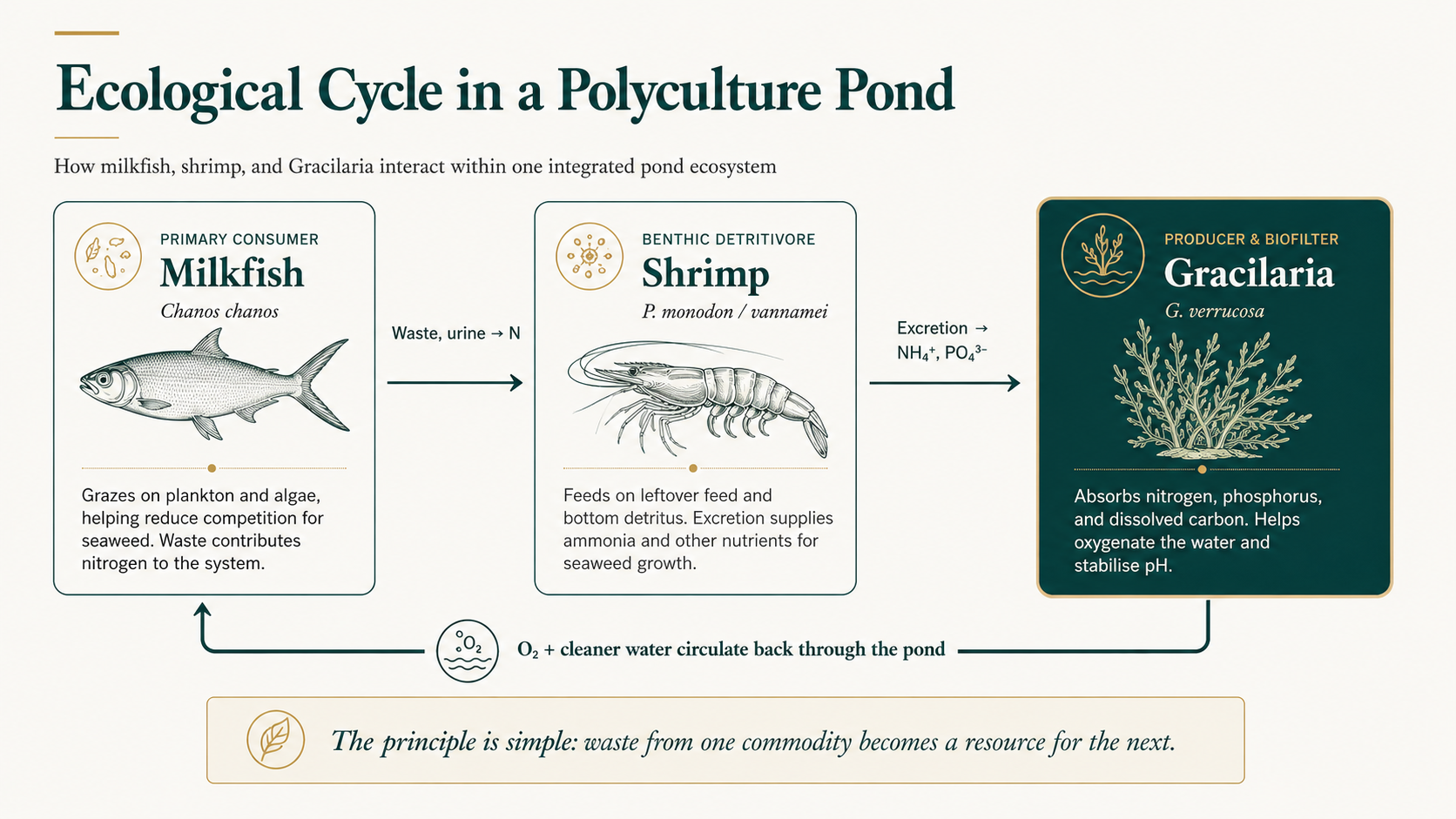
Image 1: Ecological cycle in a polyculture pond, showing how milkfish, shrimp, and Gracilaria interact through nutrient circulation and water quality regulation.
The system can also provide practical benefits for farmers. Seaweed, fish, and shrimp can be produced using the same land and water resources, while production risk is distributed across more than one commodity. There is also a wider environmental dimension. Through photosynthesis, Gracilaria absorbs dissolved carbon dioxide and converts it into biomass, making it part of the pond’s carbon cycle. Research highlighted in Prof. Esti’s material estimates carbon uptake for Gracilaria at around 9.13 tonnes of CO₂ per hectare per year, adding another ecological function to the polyculture system. In this sense, polyculture is not simply about adding species. It is about managing the biological relationships between them.
Designing a Better Cultivation System
Species combination is only one part of the system. How seaweed is positioned within the pond can also influence its performance. Prof. Esti’s material compares three approaches: direct bottom broadcasting, off-bottom nets, and off-bottom bamboo screens.
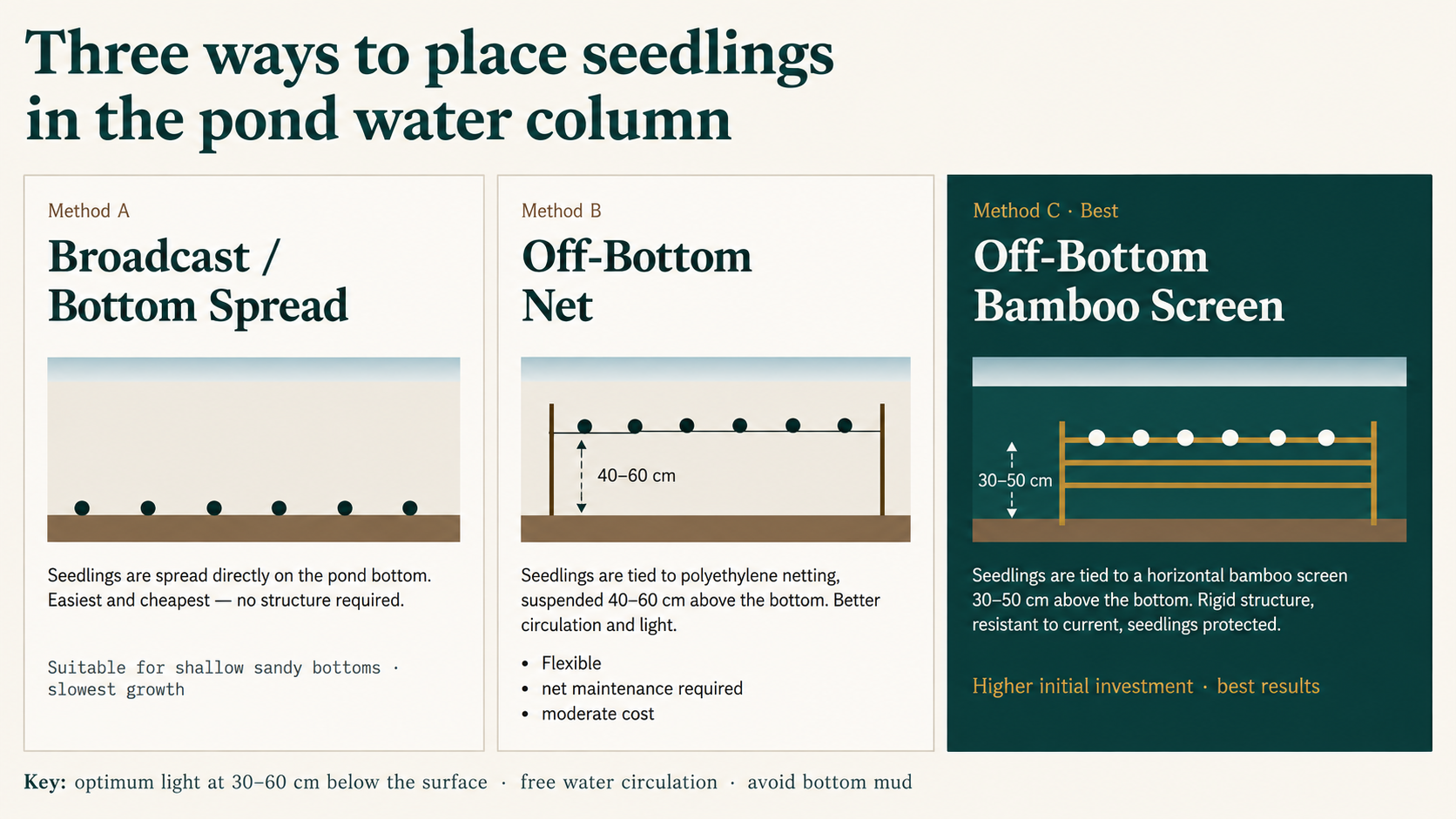
Image 2: Comparison of three Gracilaria seedling placement methods in pond cultivation: bottom spread, off-bottom net, and off-bottom bamboo screen.
These cultivation approaches are also reflected in practices already being applied by farmers in different parts of Indonesia. Bottom broadcasting has been implemented in seaweed ponds in Surabaya, while rope or net-based systems are being used by farmers in Kutai Kartanegara. In Sulawesi, bamboo-screen systems have also been applied, showing how cultivation methods can be adapted to different pond conditions, available materials, and local farming practices.
Bottom broadcasting is the simplest method because Gracilaria is placed directly on the pond floor. However, contact with sediment can reduce light exposure and water circulation around the thallus. Off-bottom systems lift the seaweed away from the pond floor, improving access to light and water movement. Among the methods compared, bamboo screens produced the strongest performance, reaching around 3,121 kg per hectare per year, compared with approximately 2,673 kg per hectare per year using nets and 1,660 kg per hectare per year with bottom broadcasting.
This shows that cultivation innovation does not always require complex technology. Practical changes in how seaweed is positioned can significantly influence growing conditions and productivity.
Finding the Right Biological Balance
Polyculture depends on finding the right balance between the species sharing the same pond. Adding more fish, shrimp, or seaweed does not automatically improve productivity. Each component creates different demands on oxygen, nutrients, space, and water quality, so stocking decisions need to consider the capacity of the system as a whole.
One configuration highlighted in Prof. Esti’s material combines approximately 10 milkfish, 10 vannamei shrimp, and 250 grams of Gracilaria per square metre. Rather than treating this as a universal formula, the key principle is balance: enough fish and shrimp are needed to support nutrient circulation without creating excessive oxygen demand or waste accumulation, while sufficient space, light, and water movement remain available for the seaweed.
The benefits of this balance can also be seen in the way harvests are distributed across the pond system. In one field-tested combination using Gracilaria, tiger shrimp, and milkfish with an off-bottom bamboo-screen method, dried Gracilaria production reached around 3,296 kg/ha per year, while tiger shrimp yielded approximately 340 kg/ha per cycle and milkfish around 572 kg/ha per cycle. The commodities are also harvested at different intervals, with Gracilaria harvested every 45–60 days, shrimp after around 4–5 months, and milkfish after around 4–6 months.
This staggered production illustrates one of the practical strengths of polyculture: the pond does not depend on a single harvest window. Instead, several commodities can contribute output at different stages of the production cycle while sharing the same cultivation area and water resources.
Managing Nutrients and Water Quality
Nutrient availability is another important part of the balance. The material highlights the use of vermicompost, or worm castings, as an organic nutrient source. Vermicompost contributes nitrogen, phosphorus, organic matter, microorganisms, and humic substances while releasing nutrients gradually.
A treatment combining appropriate stocking density, vermicompost, and pond soil produced strong results across several indicators of Gracilaria growth. Pond soil can also function as a nutrient reservoir, helping retain nutrients within the cultivation environment. However, more nutrients do not automatically mean better performance. Excessive nutrient levels can stimulate dense plankton growth and reduce the amount of light reaching the seaweed. For this reason, nutrient management needs to be considered together with water quality.
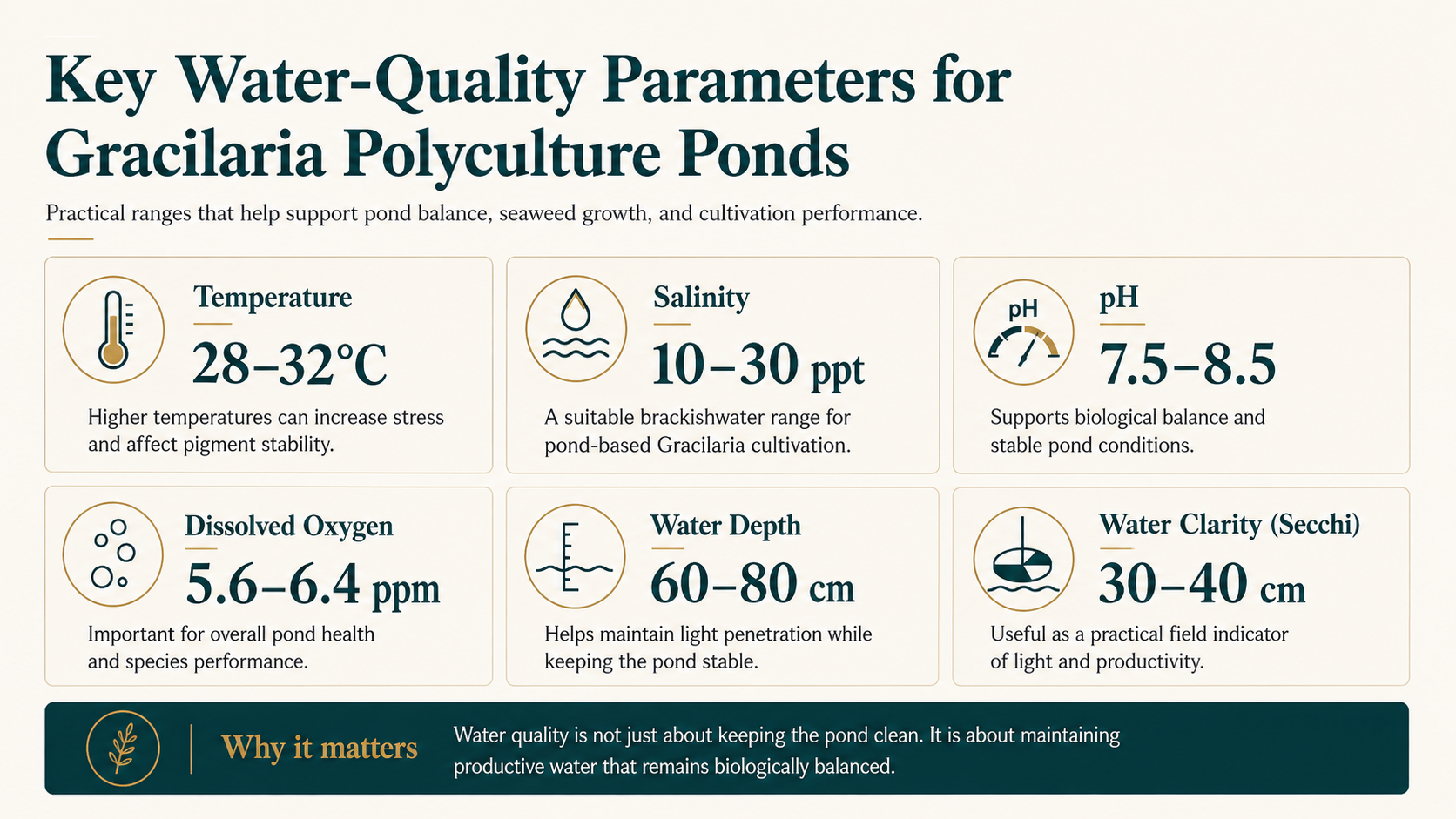
Image 3: Key water-quality parameters for Gracilaria polyculture ponds.
The material highlights practical ranges including water temperatures of around 28–32°C, pH between 7.5 and 8.5, depths of approximately 60–80 cm, and Secchi water clarity of around 30–40 cm. Water clarity is particularly useful as a practical indicator. Water that becomes too turbid may limit light penetration, while overly clear water may indicate low primary productivity. The aim is therefore not simply to maintain clean water, but to maintain productive water that remains biologically balanced.
Optimising for Quality, Not Only Yield
For Gracilaria, productivity is not the only measure of success. The characteristics of the harvested seaweed also influence its downstream value. The research presented by Prof. Esti shows that cultivation conditions can affect agar yield, viscosity, and gel strength. One treatment combining stocking density, vermicompost, and pond soil produced the highest agar yield and viscosity among the tested conditions, while another treatment produced higher gel strength. This suggests that different cultivation strategies may result in different material characteristics.
For the wider seaweed industry, this creates an important connection between upstream cultivation and downstream utilisation. Better understanding of how pond conditions influence raw material quality could help producers align cultivation practices more closely with the requirements of processors and markets. Innovation at the farm level can therefore contribute not only to higher productivity, but also to greater value further along the seaweed supply chain.
Towards More Integrated Aquaculture
The potential of polyculture lies not simply in placing several species in the same pond, but in managing how they interact. When species selection, stocking density, nutrient flows, water quality, and cultivation methods are considered as parts of one system, a pond can support multiple harvests while using its biological resources more efficiently.
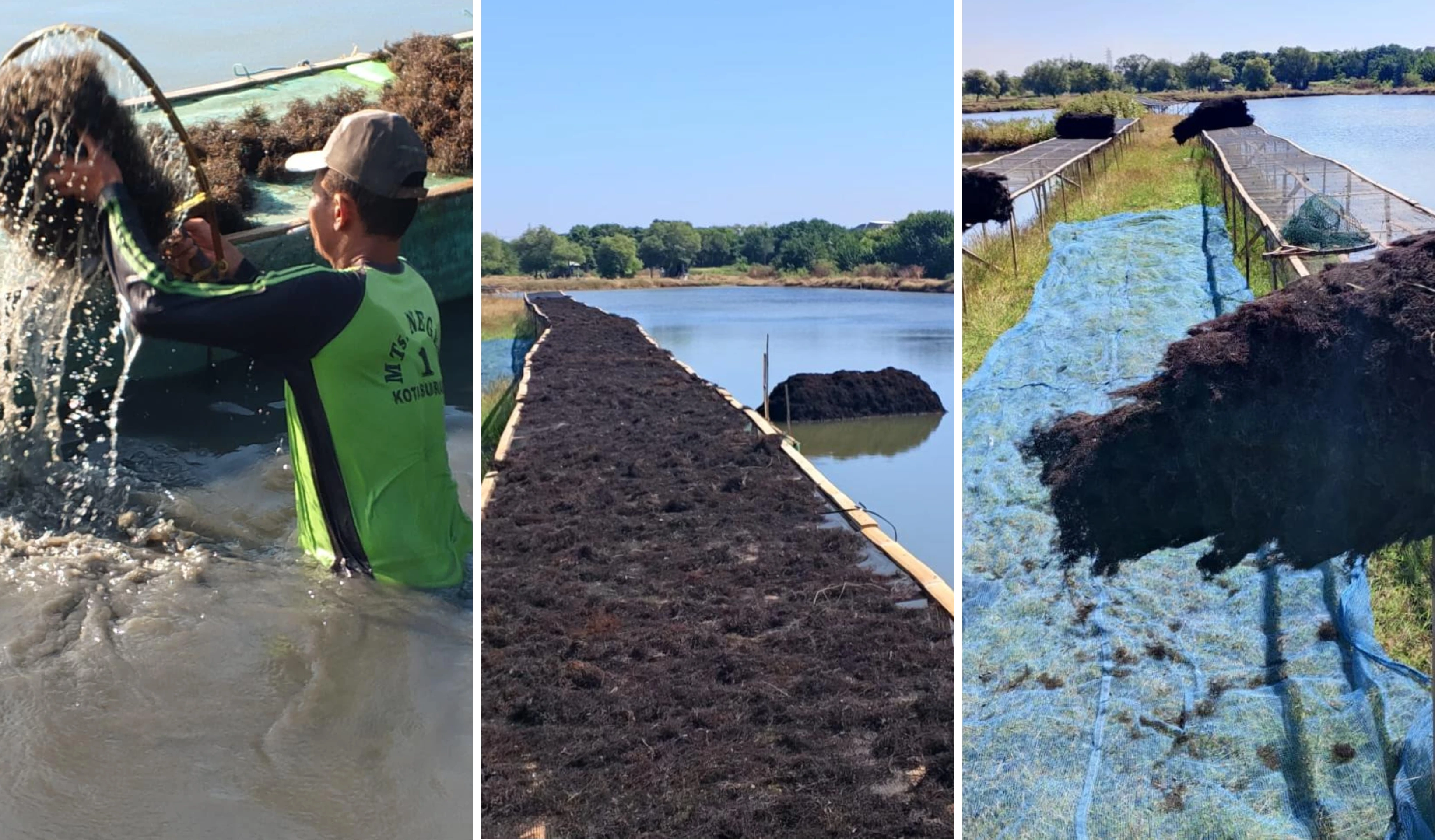
Image 4: Gracilaria harvesting and post-harvest handling in pond cultivation, from collection in the pond to drying on raised platforms.
For the seaweed sector, this broadens the meaning of upstream innovation. Progress does not always require sophisticated technology. It can also come from understanding existing biological relationships more clearly and designing cultivation systems around them. Polyculture therefore represents more than shared production space. It offers a pathway towards aquaculture where productivity, resource efficiency, and ecosystem function are managed together.
Source Material
Prof. Dr. Esti Handayani Hardi, S.Pi., M.Si. Optimasi Budidaya Rumput Laut secara Polikultur: Metode Substrat, Kepadatan Tebar, dan Manajemen Nutrisi untuk Produktivitas & Kualitas Agar Gracilaria verrucosa. Technical presentation.
Other Innovation
From Biomass to Biology: How Birufinery is Reimagining Tropical Seaweed for Agriculture
2026-07-08
Pulau Lapang – Building a Sustainable Future through Seaweed and Eco-Tourism
2025-11-13
🌿Strengthening Seedstock Resilience: A Cooperative Eucheumatoid Hatchery for Southeast Asia
2025-10-17