
Rethinking Seaweed Farming: How Project SeaBox Is Charting a New Course for Coastal Livelihoods

2025-06-18
2025-06-18
Prefer listening over reading? Tune in to our audio podcast for a more personal, conversational take on the SeaBox journey.
In the heart of South Sulawesi, Indonesia, a quiet transformation is underway. Among rising tides and growing climate challenges, an innovative pilot project called Project SeaBox is proving that it’s possible to farm smarter, not just harder. By reimagining the fundamentals of seaweed cultivation, Project SeaBox is offering new hope to coastal communities facing uncertain futures.
🌿The Challenge with Traditional Lines
For years, seaweed farming across Indonesia has relied on long-line systems—networks of rope stretched across the ocean surface. But with warming waters, erratic weather, and labor-intensive processes, this method is showing its limits. Farmers are seeing reduced yields, more crop failures, and dwindling income opportunities.
Worse still, the surface-only model isn’t designed to handle the climate disruptions that now define the seascape. That’s where Project SeaBox steps in—with a design that literally dives deeper.
🪟 Introducing the SeaBox: A 3D Approach to Cultivation
Built with a bamboo frame and a netted structure, the SeaBox allows farmers to “pour in” their seaweed and let it grow—eliminating the tedious work with individual lines and having to manually adjust buoyancy of each line to adapt to daily heat or salinity changes. But this is more than a labor-saving tool. It’s a 3D farming system that uses the water column, accessing cooler, nutrient-rich zones and reducing exposure to heat, low salinity, and predators.
⚙️ From Prototype to Promising Pilot
The first SeaBoxes were deployed in Ujung Baji village in late 2024. Initial trials were cut short by an intense storm, prompting a redesign. But the setback didn’t stop the team. By May 2025, the SeaBox was back in the water, and the results were striking:
🔹1.6 – 1.9× faster biomass gain compared to traditional long-lines
🔹Healthier seaweed with a rich brown color vs. pale yellow in control groups
🔹Less loss from break-offs, as fragments stayed within the box
Local farmer Dg. Ngopo, one of the project’s earliest adopters, reported a significant reduction in maintenance time—just 15 minutes for the box compared to an hour for traditional lines.
🌍 A Bigger Vision: Livelihoods, Ecosystems, and Food Security
While the SeaBox was designed with seaweed farmers in mind, its vision aims to reach further:
🔹Reduce pressure on stocks in overfished communities by offering a new, environmentally restorative, income stream – that can also act as shelter and haven for young fish
🔹Open deeper waters for cultivation, potentially allowing shoreline restoration (e.g., mangroves)
🔹Enabling multi-trophic farming as integral part of the system design, such as adding oysters and mussels for diversified marine agriculture – to further restore environments and support livelihoods
🚀 What’s Next?
The journey continues. Over the coming weeks, the SeaBox team will:
🔹Complete the full 45-day cycle for SeaBox
🔹Conduct lab testing on harvested seaweed for quality comparisons
🔹Launch SeaBox V2 and adjusted V1, featuring storm-resistant upgrades and expanded cultivation features—including oysters.
🤝 Innovation Meets Local Wisdom
A key part of SeaBox’s success lies in its global-local partnership. The project is led by Project SeaBox, but its execution is deeply rooted in close collaboration with MARI Oceans, a community-based organization in Indonesia.
🔹Project SeaBox: Design, impact strategy, analytics & high-level project management
🔹MARI Oceans: Local construction, cultivation know-how, data collection, farmer engagement
📣 Final Thought
Every thriving kilogram of seaweed represents more than a product. It’s a step toward regenerative livelihoods, healthier oceans, and a food system resilient to tomorrow’s challenges.
Project SeaBox is not just an experiment in design—it’s a blueprint for change.
Other Innovation
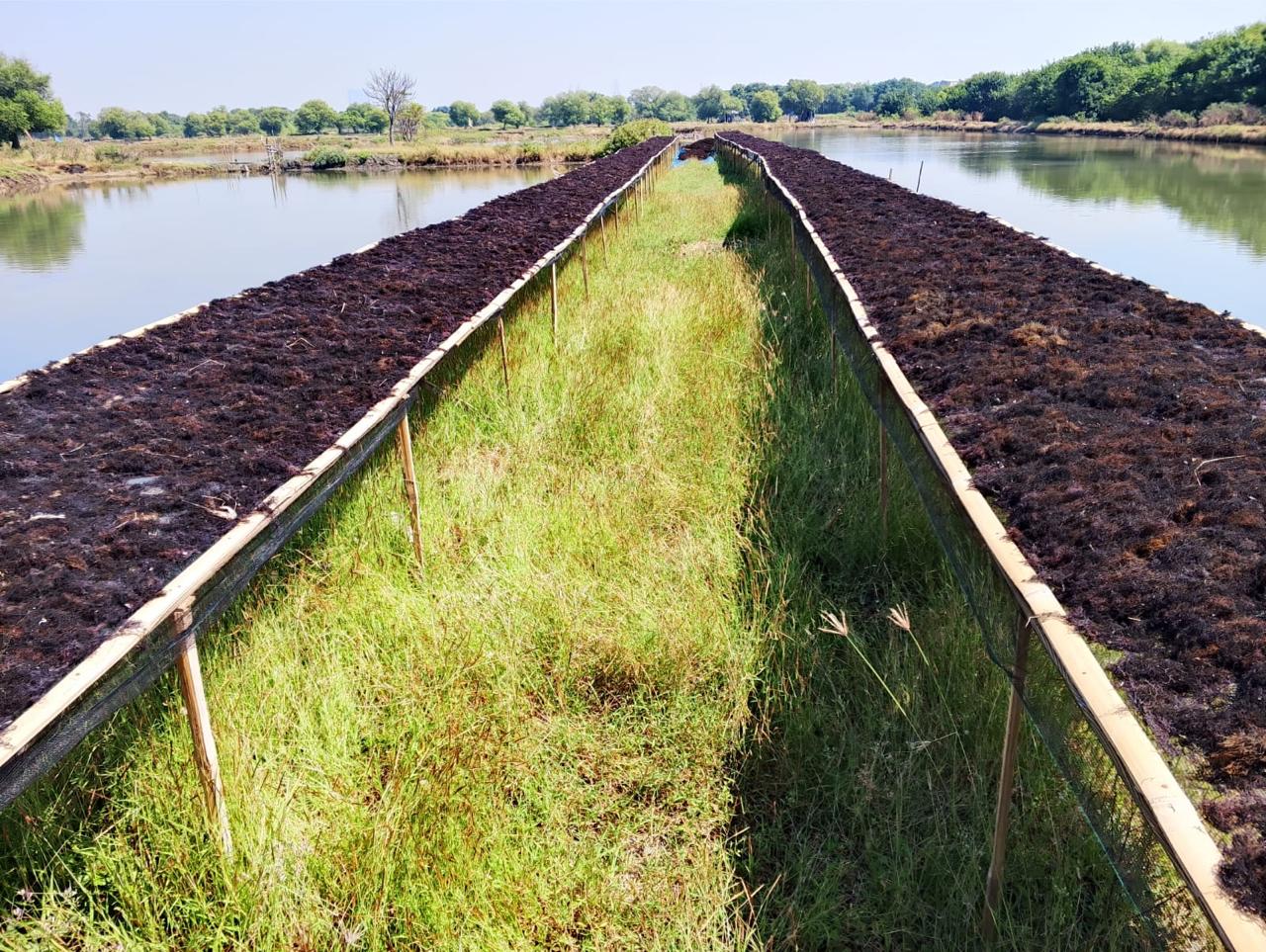
From Pond to Integrated Ecosystem: Rethinking Gracilaria Cultivation Through Polyculture
2026-08-21
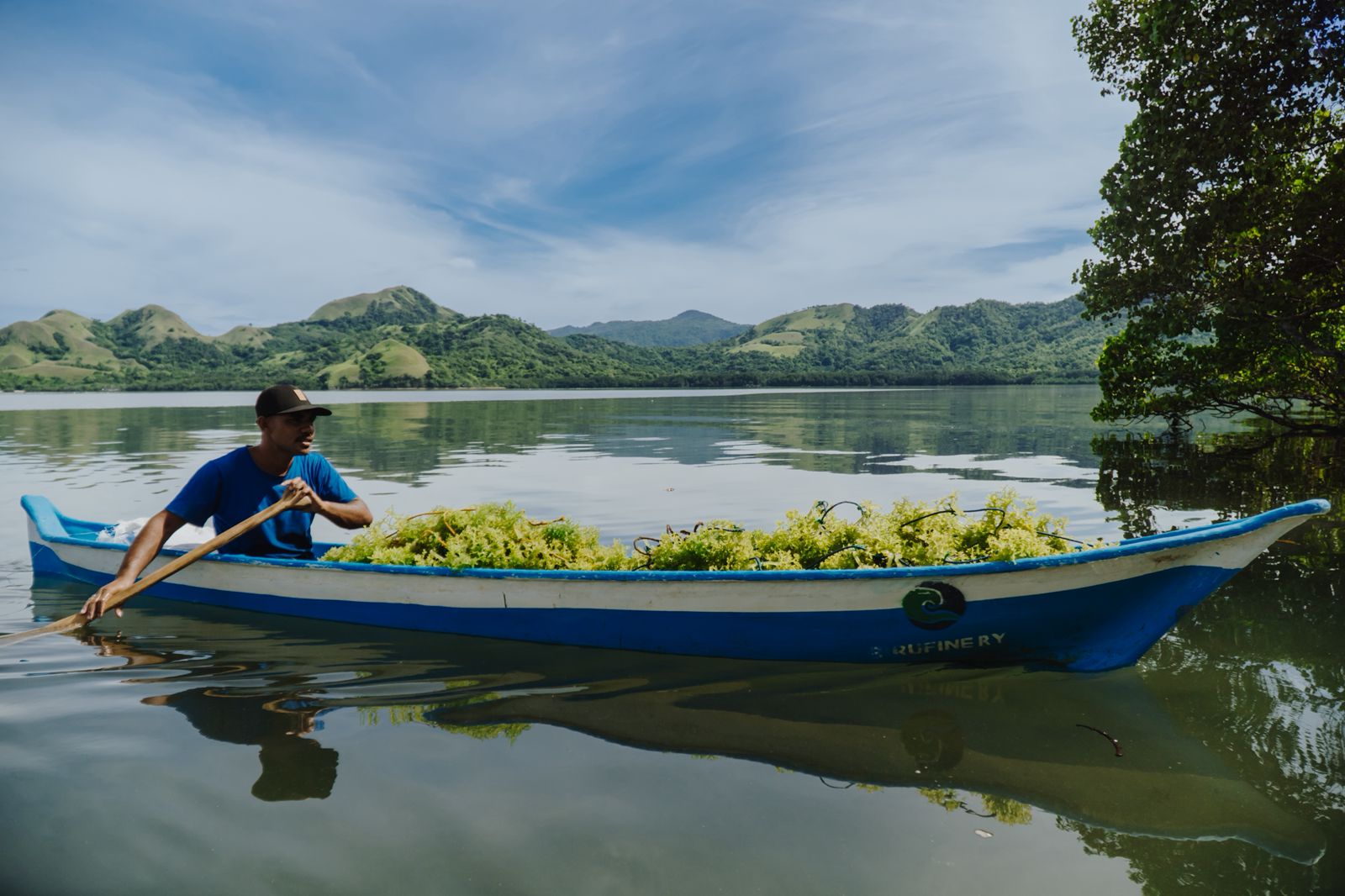
From Biomass to Biology: How Birufinery is Reimagining Tropical Seaweed for Agriculture
2026-07-08
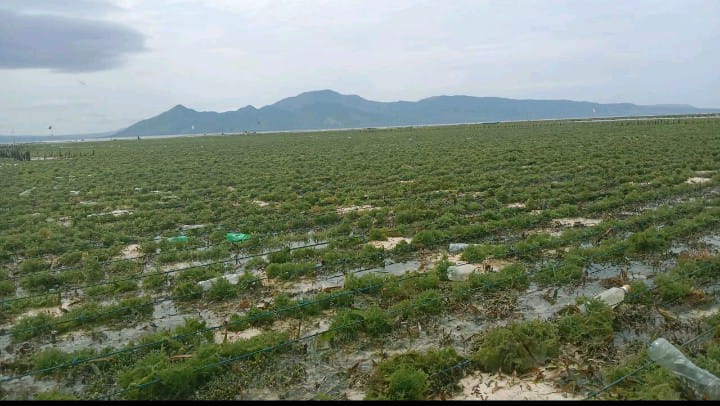
Pulau Lapang – Building a Sustainable Future through Seaweed and Eco-Tourism
2025-11-13