
Webinar Introsea Series #6 - One Seaweed Industry, Different Markets: What Indonesia Can Learn from East Asia, Europe, and North America

2026-10-07
2026-10-07
Indonesia is one of the countries contributing to global seaweed production, but production volume is only one part of participating successfully in an increasingly diverse international market. There is, in fact, no single “global seaweed market”.
Across East Asia, Europe, and North America, seaweed has developed through very different pathways. In some markets, it is deeply rooted in everyday food culture. In others, the sector is being shaped by research, sustainability, regulation, and emerging applications. Elsewhere, industrial buyers approach seaweed primarily through functionality, specifications, reliability, and compliance.
These different perspectives were explored during INTROSEA Webinar Series #6, “Geliat Rumput Laut di Pasar Global”, held on 30 September 2026. Building on previous INTROSEA discussions around Indonesia’s seaweed ecosystem, the sixth webinar shifted the lens outward. Rather than asking only what Indonesia can produce or process, the discussion examined a different question: What do different international markets actually expect from seaweed? Understanding those differences could help Indonesia identify where its strengths are most relevant and how they can be matched with market needs.
East Asia: A Market Built on Culture and Consumption
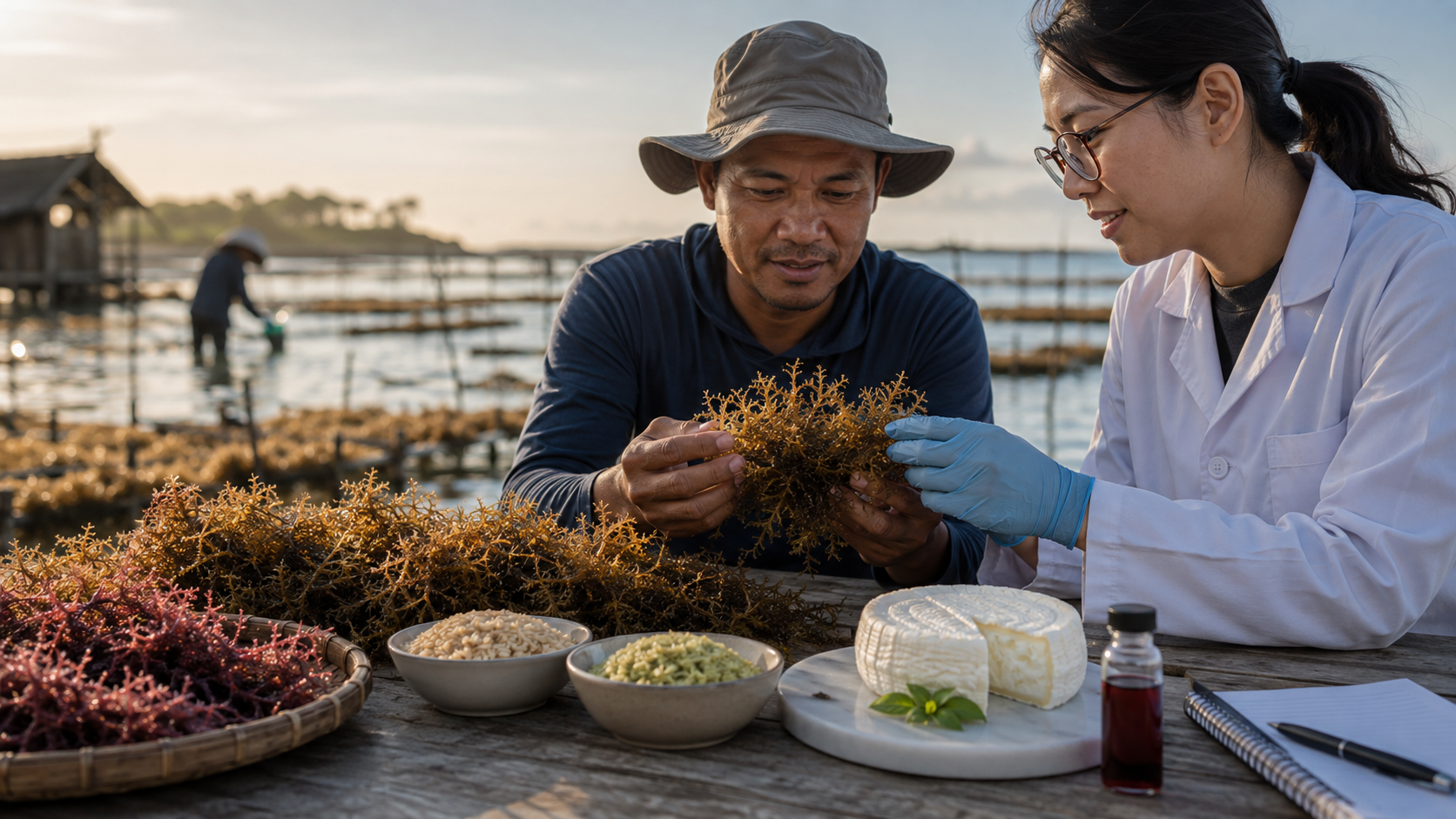
East Asia offers one of the clearest examples of what can happen when seaweed becomes deeply integrated into everyday life. Dr. Indyaswan Tegar Suryaningtyas of Pukyong National University highlighted how seaweed has long been part of food cultures across Korea, Japan, and China. Different species have developed distinct culinary roles, including gim or nori, wakame, kombu, and other commonly consumed seaweeds. This relationship did not emerge simply because seaweed was available. Its development was supported by geography, its ability to be dried and preserved, its distinctive taste and umami, and its gradual incorporation into local food traditions. Over time, seaweed moved from being a locally available resource to becoming part of everyday cuisine and cultural identity.
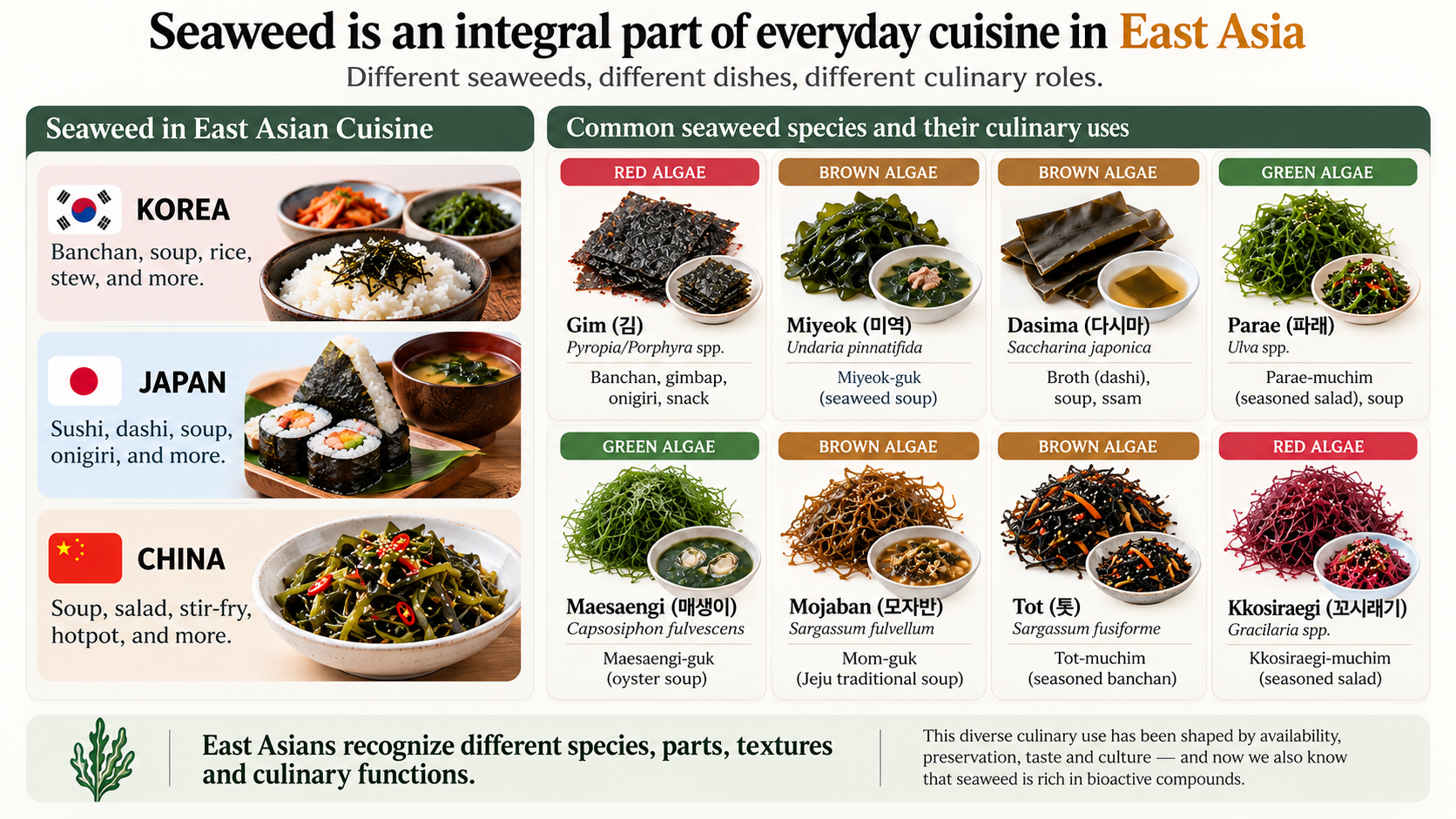
Image 1 : Across East Asia, different seaweed species have developed distinct culinary roles, supported by generations of everyday consumption.
That familiarity has also created a foundation for product innovation. The presentation showed how seaweed can progress from traditional and habitual consumption towards increasingly diverse applications, ranging from processed foods and functional products to purified compounds and higher-value health and industrial applications.
For Indonesia, the lesson is not necessarily to replicate the East Asian model. Indonesia has its own species, culinary traditions, farming systems, and market history. What East Asia demonstrates is that consumer familiarity can itself become an economic asset. When consumers already understand how seaweed fits into their daily lives, businesses have a stronger foundation for developing new products and applications around it. This highlights that strengthening Indonesia’s seaweed sector requires more than expanding its share of global markets. It also means understanding domestic demand and consumer preferences, and developing products that serve the home market.
Europe: A Market Shaped by Innovation and Regulation
Europe presents a very different picture. According to Agusman, a doctoral researcher in Bioprocessing Engineering at Wageningen University & Research, Europe represents only a small share of global algae production. Asia accounted for 97.4% of global algae production in 2019, while Europe’s contribution remained comparatively limited. Yet the production volume tells only part of the story. Europe has developed significant activity around research, processing technologies, policy, and emerging applications for algae and seaweed.
The European Union’s algae initiative introduced 23 actions intended to strengthen the sector, covering areas including governance, business conditions, research, consumer acceptance, sustainable protein, circularity, resource resilience, and coastal economic development. Public investment has followed. Between 2014 and 2023, European Union programmes funded 219 algae-related projects involving 1,470 organisations, covering areas such as cultivation, biorefineries, offshore systems, and the development of higher-value products from algae resources.
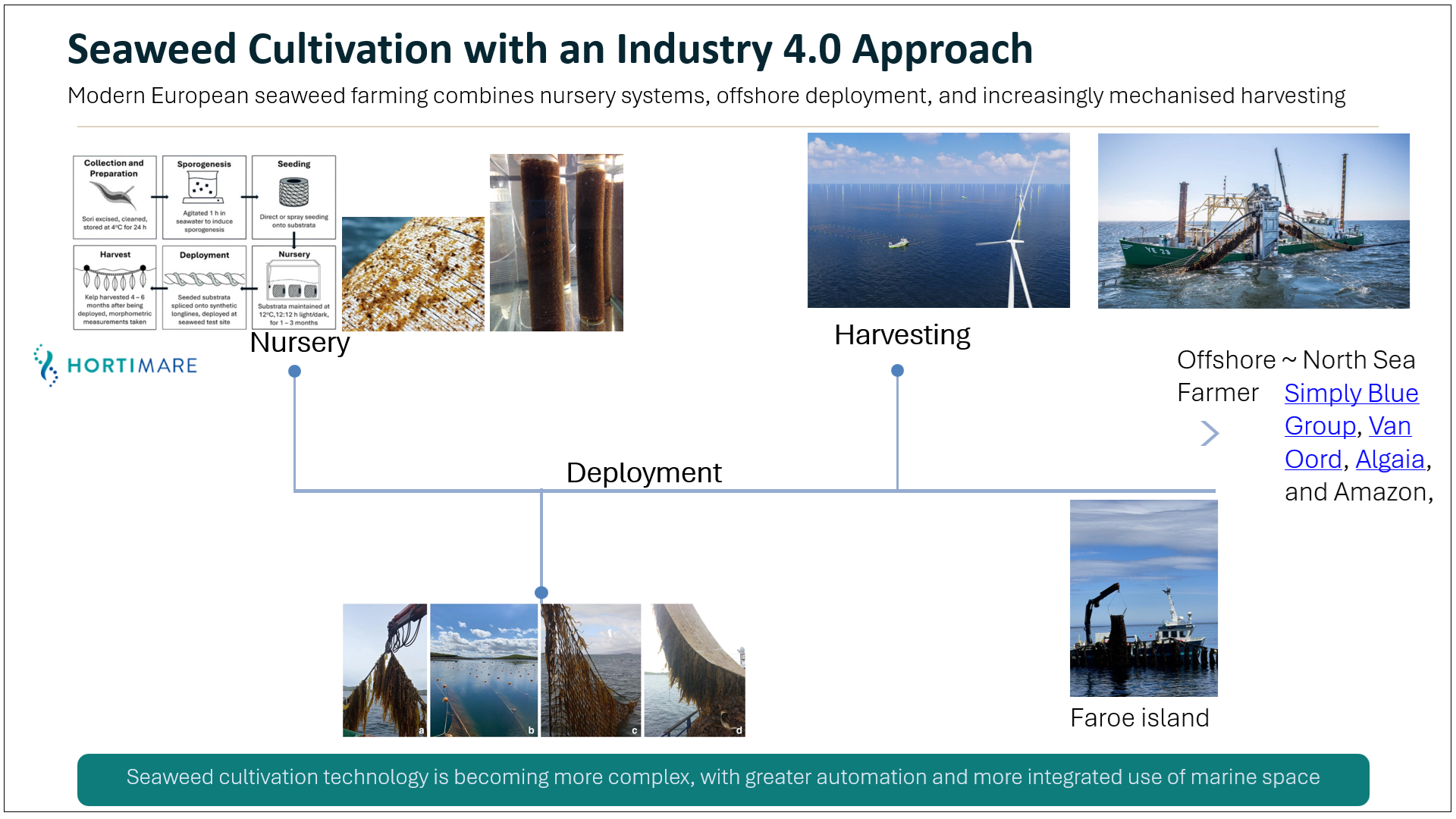
Image 2 : An overview of modern European seaweed cultivation using an Industry 4.0 approach, illustrating the progression from controlled nursery and seeding systems to offshore deployment and increasingly mechanised harvesting.
Europe therefore offers a different model from East Asia. Rather than being driven primarily by generations of widespread consumption, parts of the European seaweed sector are being developed through research, public policy, sustainability priorities, industrial experimentation, and technological innovation. But the market also illustrates the challenges involved in scaling a seaweed industry. The webinar identified barriers including complex permit procedures, biological and seasonal variability, offshore operating costs, post-harvest handling, food-safety requirements, regulation, financing, and uncertain demand.
For Indonesian producers and processors, this means Europe cannot be approached simply as another export destination. Access to the European market increasingly involves considerations around consistent quality, safety, traceability, regulatory compliance, environmental performance, and the suitability of products for specific applications.
Potential opportunities highlighted during the webinar included closer alignment with European quality requirements and technology collaboration in cultivation and seed development.
North America: A Market Driven by Function and Performance
The United States and Canada introduce yet another market logic. Rachmad Poetranto of the KADIN Indonesia Trading House USA Chapter approached the discussion from a market-access and industrial-buyer perspective. His central message was straightforward: buyers generally do not purchase seaweed simply because it is seaweed. They are looking for a function. Depending on the application, that might mean texture, stability, gelling, thickening, suspension, or another specific performance requirement.
After function comes specification. Buyers may consider moisture levels, purity, heavy metals, microbiology, batch consistency, supply reliability, documentation, and compliance with the appropriate regulatory pathway. This shifts the focus from simply offering a commodity to understanding how a seaweed-derived ingredient needs to perform within a specific application.
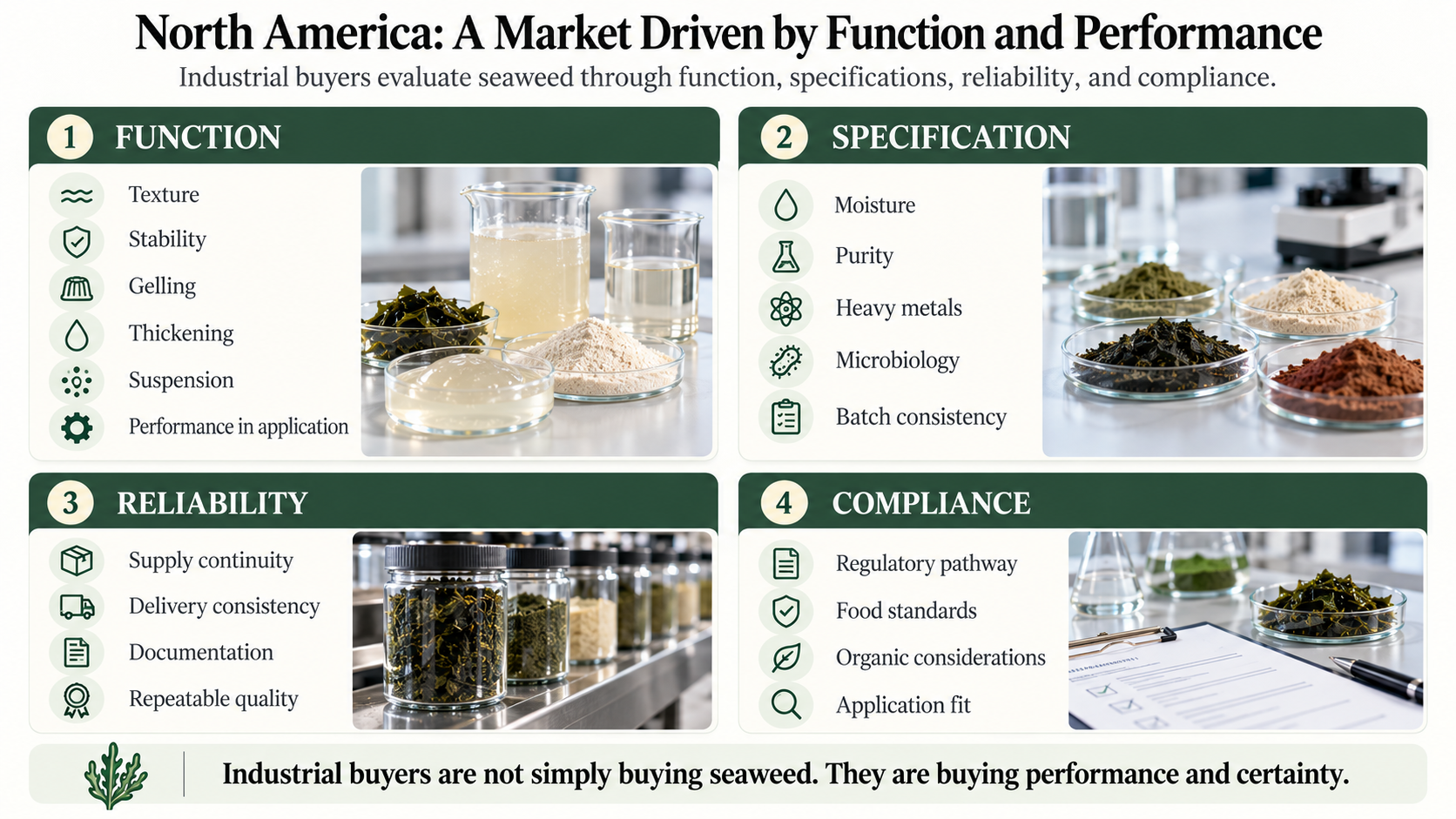
Image 3: Key factors North American industrial buyers consider when evaluating seaweed-derived ingredients, including function, specifications, reliability, and compliance.
That perspective moves the conversation towards market intelligence and application-driven development. The North American market is also not an entirely new destination for Indonesian products. Public market evidence presented during the webinar showed Indonesian carrageenan and seaweed flour already reaching buyers in the United States and Canada. The more relevant question, therefore, is not simply whether the market exists. It is what buyers require, what applications they are serving, how suppliers are evaluated, and what Indonesian companies must consistently deliver to become stronger partners within those supply chains.
Different Markets, Different Expectations
Seaweed is a shared resource, but the reasons people buy, develop, or invest in it differ: culinary familiarity in East Asia, research and regulation in Europe, performance and compliance in North America. A strategy that works in one market will not necessarily work in another. A consumer food product and an industrial ingredient face very different conditions, and a highly regulated market requires decisions on traceability, documentation, and processing well before commercialisation.
Turning Market Needs into Action
Rachmad Poetranto offered a practical approach to market engagement: start from the buyer's problem, not from the product. Instead of opening with "We have Indonesian seaweed," ask "What problem are you trying to solve?" Translate the answer into required functions and specifications, then check whether Indonesia has the capability to deliver.
The process runs from listening to the buyer, defining the requirement, developing and testing samples, and gathering feedback, to scaling only once the solution is validated. To support this, he proposed a Buyer Requirement Sheet:
Company → Problem → Required Function → Specification → Regulatory Question → Trial Volume → Target Economics → Next Step
This turns market engagement into actionable market intelligence. Technology choices in processing, formulation, and development should follow market and regulatory requirements, not the other way around.
Finding Where Indonesia Can Compete
Taken together, the perspectives from East Asia, Europe, and North America suggest that Indonesia does not need to follow a single market model. The more useful question is where its strengths meet real demand, and which capabilities it needs to build in order to respond. Six priorities emerge from the discussions:
- Start from market needs. Begin with what buyers require (functions, specifications, regulatory expectations), not only with what Indonesia already produces.
- Strengthen quality, standards, and traceability. Consistent quality, documentation, and regulatory readiness are what keep a supplier in international markets.
- Diversify both species and applications. Look beyond traditional hydrocolloids such as carrageenan to food, functional ingredients, and refined products.
- Improve upstream and processing capabilities. Better cultivation and seed technologies, and more efficient multi-product biorefineries, support stronger participation across markets.
- Choose the right position in the value chain. Moving further downstream is not automatically best. The goal is to capture value where Indonesia is most competitive, whether through biomass, standardised ingredients, formulation, application knowledge, or closer customer relationships.
- Build value through collaboration. Farmers, processors, researchers, regulators, businesses, buyers, and international partners all have a part to play.
The strongest opportunities will come from connecting market needs with Indonesia's capabilities, and building that value together.
Source: Webinar Series #6 materials from INTROSEA, September 30, 2026.
Contact Person : Secretary General of Introsea, Bapak Didit Adiputra
Other Article
Introsea Webinar Series #5 : From Biomass to Bioeconomy Unlocking Higher Value from Indonesia’s Seaweed
2026-09-10
Introsea Webinar Series #4 : Strengthening the Upstream to Unlock Sustainable Seaweed Innovation
2026-08-05
Introsea Talkshow Series #3: Mining Green Gold from Indonesia
2026-07-08